article
Everyone’s Talking About AI. Does Your Business Need It?

With every company rushing to adopt AI, it’s easy to feel like your business is falling behind if you haven’t started yet.
Remember when building something meant starting with a lot of code? Turning an idea into a working product took time and patience. Today, we can pick a model, write a little code, or even let AI write it for us, and suddenly have something that works. With AI, going from an idea to a working prototype has never been easier.
So most companies feel they need to “do something with AI”. A competitor launches a chatbot, a board member asks about the AI plan, and soon there’s a budget with no clear problem attached to it.
Many AI projects start that way, with the tool first and the use case later. The result is often a demo that looks good in one meeting and then sits unused.
A better start is simpler. Learn what AI does, then find the work in your business that fits it.
Using Vertex AI, or moving from AI Studio to Vertex AI?
Check out our complete guide to get started: Vertex AI Adoption Guide.
So, How Does AI Actually Work?
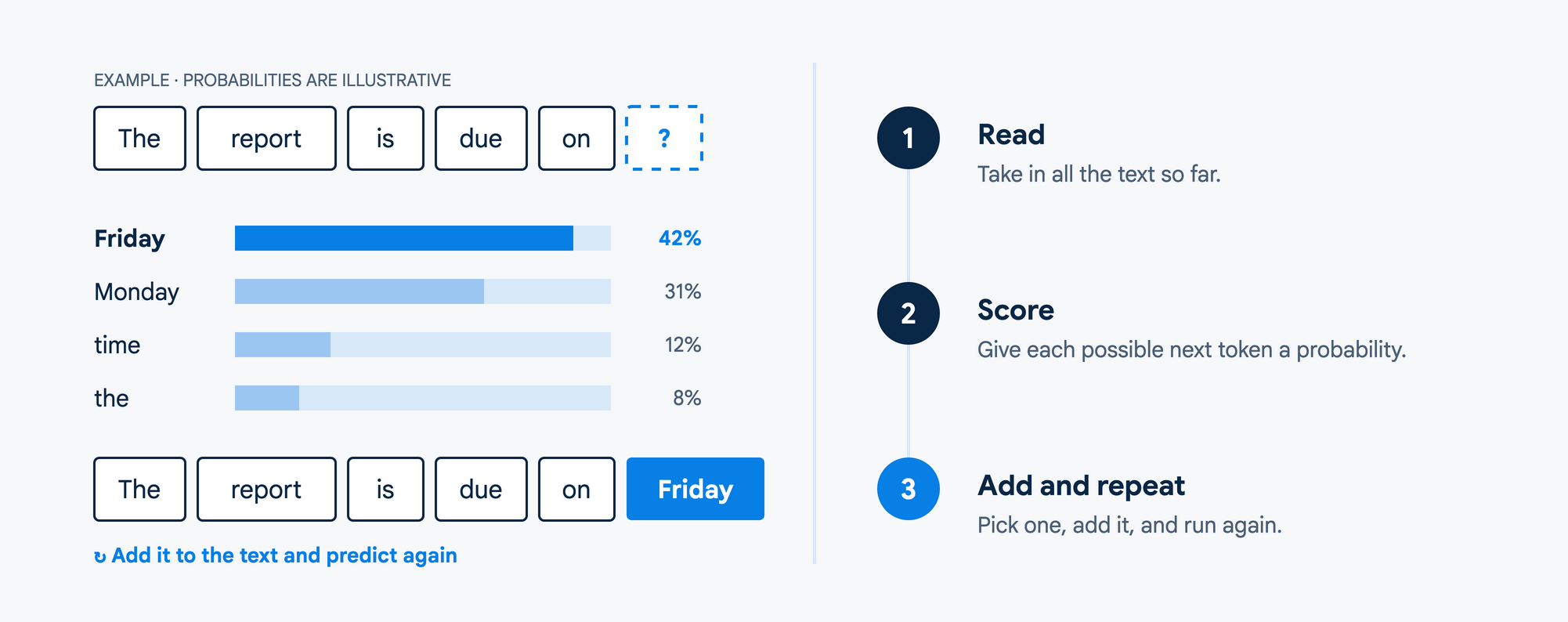
When people say AI today, they usually mean a large language model (LLM), such as Gemini. Its core job is small. It predicts the next token.
A token is a word, part of a word, or a single character. For Gemini, one token is about 4 characters, and 100 tokens are about 60 to 80 English words.
The model reads the text so far and gives each possible next token a probability. It picks one, adds it to the text, and repeats. Google describes LLMs as autocomplete that can predict thousands of tokens.
 First, AI writes what is likely. A model can produce content that isn’t factual, which is called a hallucination. Grounding ties the model’s answers to sources you can check, such as Google Search or your own data, and reduces hallucinations.
Second, you pay per token, for what you send and what comes back. Long documents and long answers cost more. Newer models also think before they answer, and those thinking tokens are billed with the output while staying hidden from the answer. Count tokens on your real prompts before you set a budget.
Gemini also reads more than text. It takes in images, PDFs and audio, and turns them into text or structured data.
Levels of Enterprise AI
Use cases go from simple to rare. The simple ones need a prompt and little else. The rare ones need a pipeline built around the model.
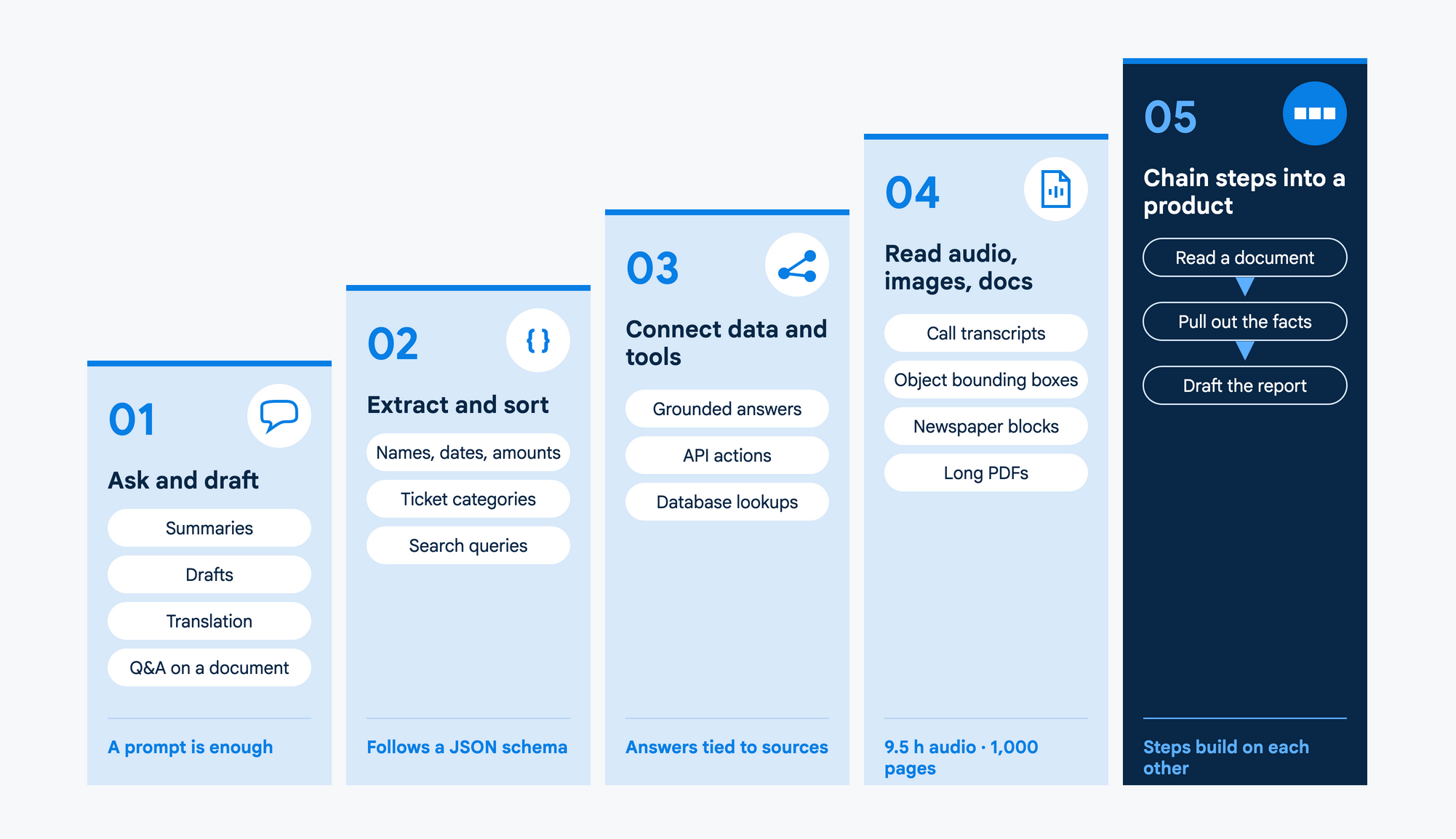
Level 1 is ask and draft: summaries, drafts, translation and answers about a document. A prompt is enough.
Level 2 is extract and sort. Gemini follows a JSON schema, so names, dates, categories or search queries come back ready for another system.
Level 3 connects the model to your data and tools. Answers are grounded in your own documents, and API calls take actions such as creating an invoice.
Level 4 reads audio, images and documents: transcripts with speakers and timestamps (up to 9.5 hours of audio per prompt), objects with bounding boxes, and PDFs of up to 1,000 pages.
Level 5 chains steps into a product. The model runs several steps in a row, and each step uses the output of the one before. It can read a document, pull out the facts, then draft a report from them. This level takes the most design work.
Our Gemini Projects
1. Phone Call Transcription with Speaker Labels
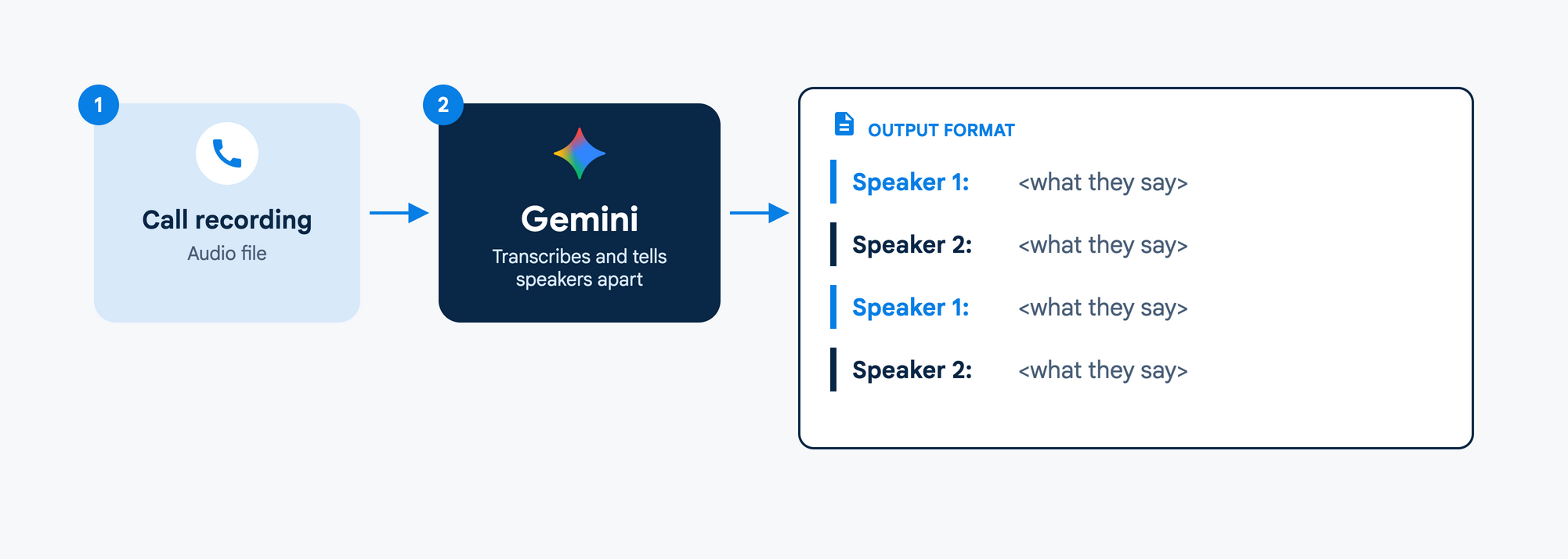
An automated pipeline turns phone call recordings into transcripts. Each line is mapped to a speaker in a custom format.
 2. Boolean Search Query Generator
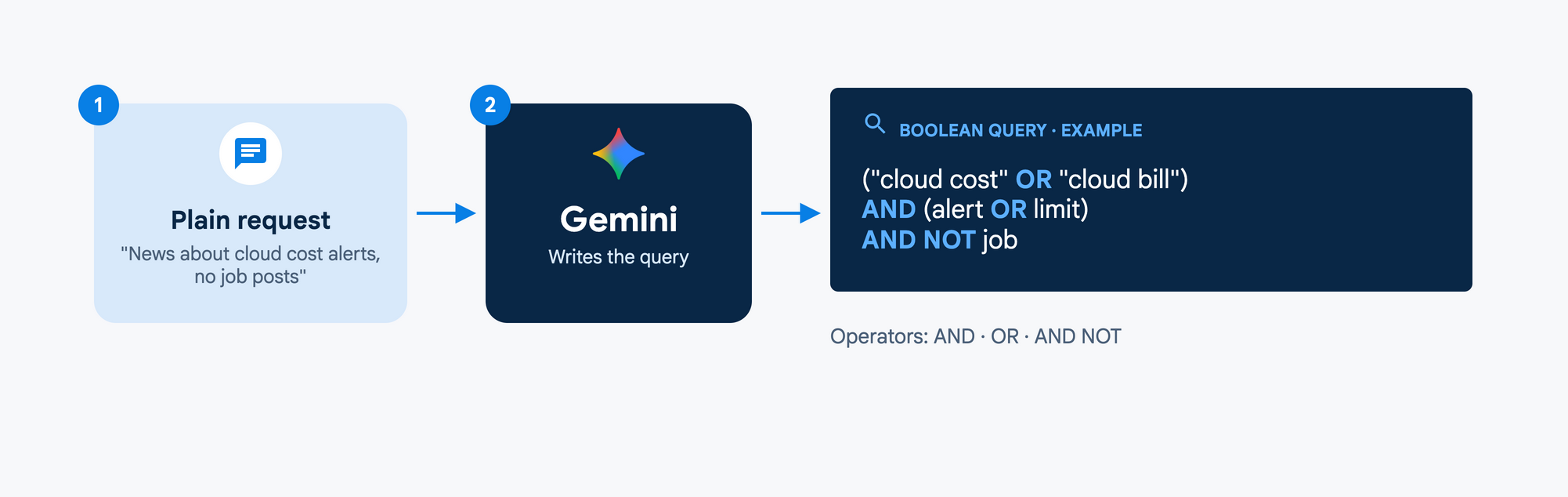
The user describes what they want to find, and Gemini writes a Boolean search query with AND, OR and AND NOT. The query finds articles and news inside the client’s own website and platform.
 3. Newspaper Block Labelling
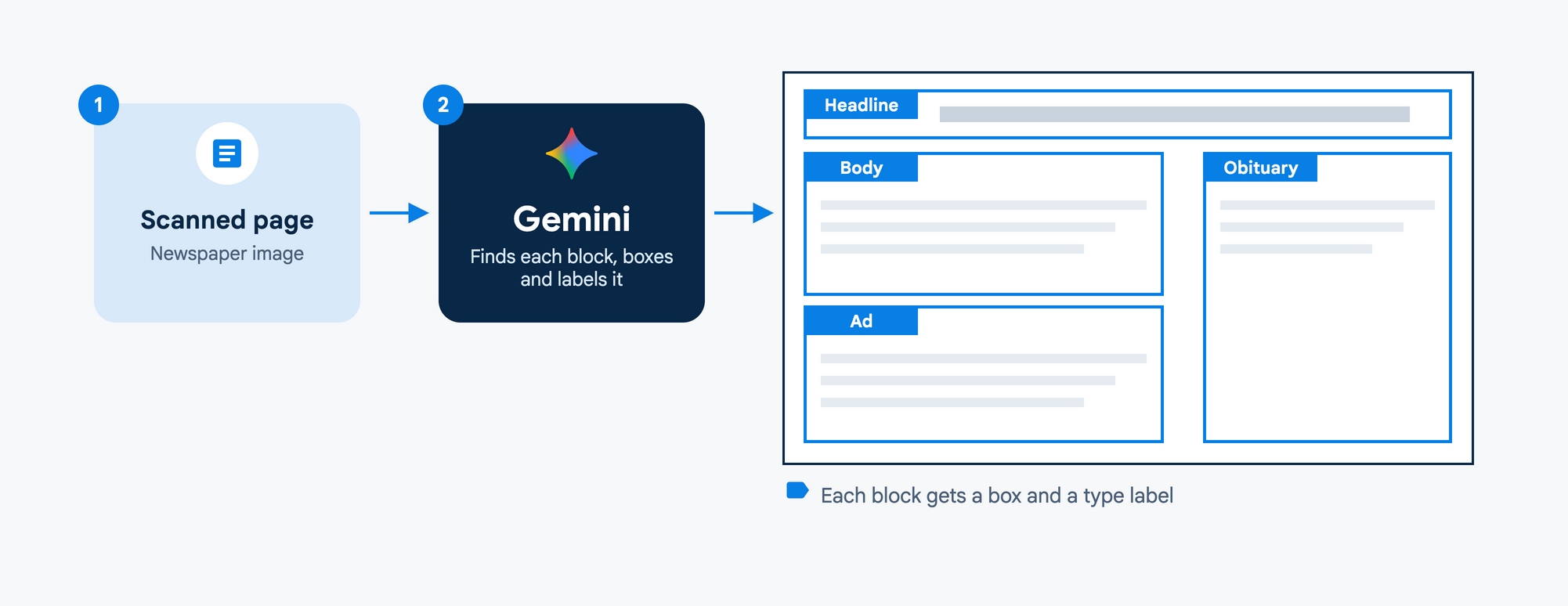
This is OCR for scanned newspaper pages. Gemini finds each block on the page, draws a box around it, and labels its type, such as headline, body, caption, ad or obituary.
4. Floorplan to 3D Virtual Tour
This one starts from a plain black-and-white line floorplan. Gemini runs every step. It turns the lines into a 3D top-down view, then into a 360° view you can move through freely, like Google Street View.
 Things to Note
Start with the problem, then pick the level. Levels 1 and 2 alone are enough for many teams.
Plan for wrong answers. Where accuracy matters, ground the model in your own data and keep a person in the loop.
Long inputs cost more on every call, and hours of audio or a large PDF add up fast. Set a maximum output length too, so a model that starts repeating itself stops at a limit.
Levels 4 and 5 need a pipeline, test data and someone who owns it.
We help global enterprises find the right AI use cases and bring them to life, from quick prototypes to production-ready pipelines. Whether it’s Gemini on GCP, self-hosted LLMs, or other AI models running on your own infrastructure, we help you build what fits your business.
Have an AI idea in mind? Let’s figure out how to make it work!
References
Note: This post is based on Google Cloud’s documentation as of October 22, 2026. Gemini features, limits and pricing change over time. Check the references above and the official documentation for the latest information.
Want help putting this into practice?
Book a consultation with Indonesia's Google Cloud Diamond Partner.